Research

I work on transferring human intent and contact into robot action: mixed-reality haptic teleoperation, skill learning from force and tactile sensing, and learning from first-person human demonstration.

01

MR-Assisted Haptic Robot Teleoperation

How can mixed-reality interfaces and haptic gloves transfer human intent and contact to remote robots?

Contact and intent have to survive the distance between a human and a remote robot. Current work includes CobotAI’s Glovity wearable stack for hand-pose capture and mapping onto arms and dexterous hands, together with mixed-reality visors that keep the operator in a shared visual loop. Related field work uses AR to guide aircraft drilling so a person stays available for contact and recovery.
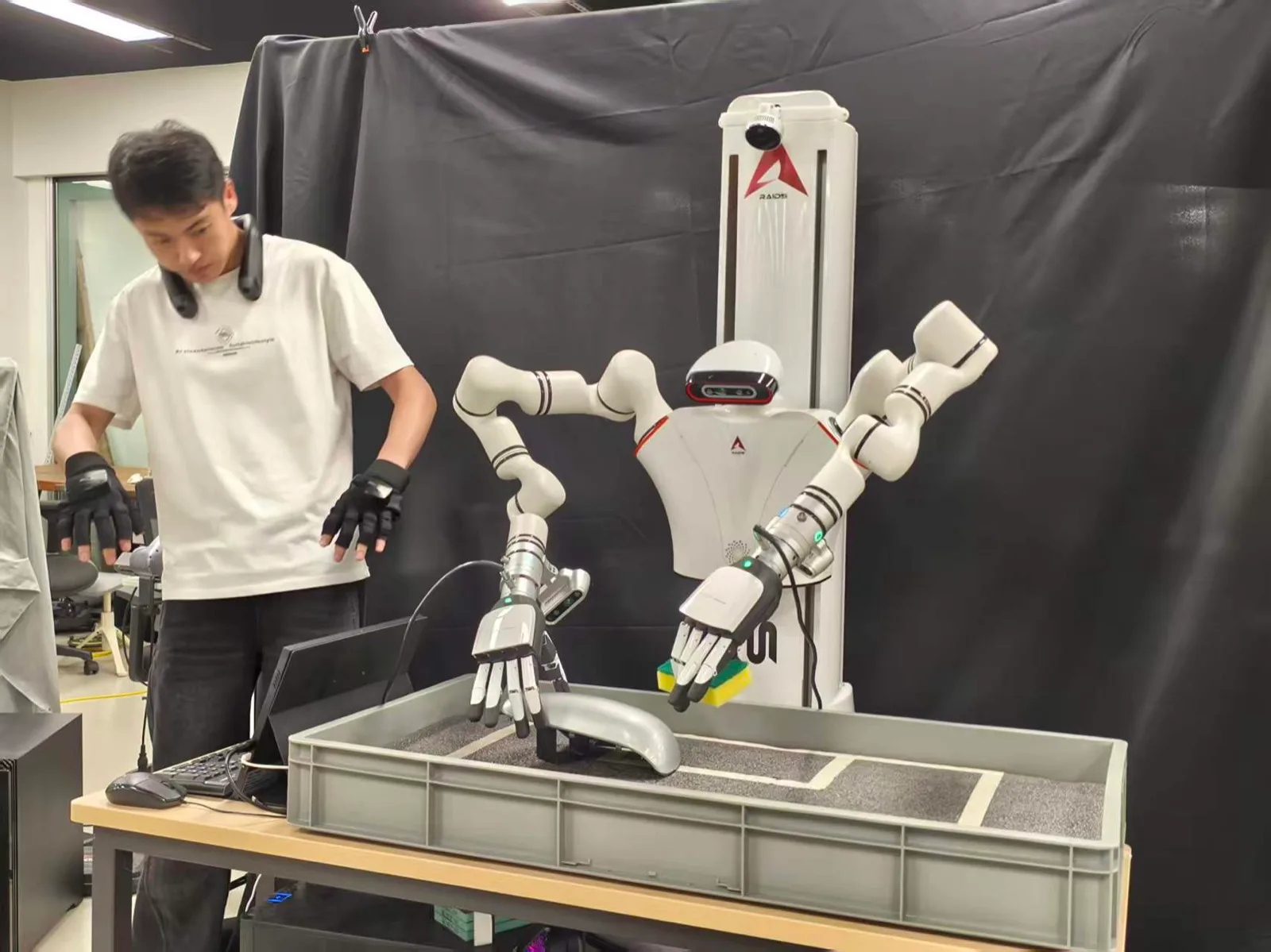
Teleoperating a dual-arm dexterous robot during a contact-rich polishing task.
02

Force–Tactile Robot Skill Learning

How can robots acquire contact-rich manipulation skills from force and tactile sensing?

Current work looks at visuo-haptic policies that keep a slow visual plan and a faster force–tactile refinement loop in one network. Earlier work used 6D pose estimation and point-cloud completion so a grasp could be computed from a single RGB-D view when object edges were missing.

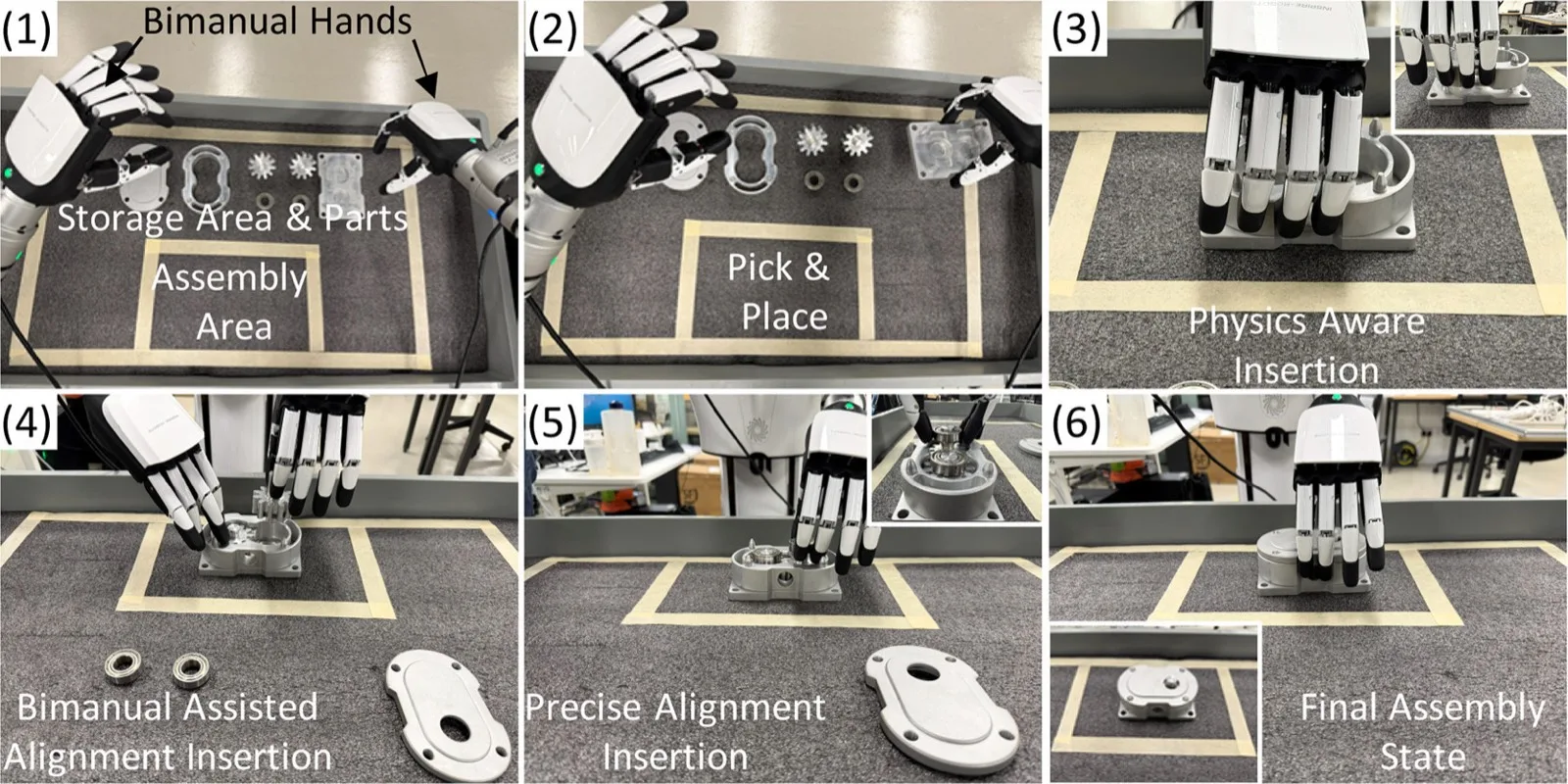
Six-step bimanual assembly sequence from pick-and-place through contact-rich insertion.
03

Egocentric Robot Learning from Humans

How can robots learn dexterous skills from first-person human demonstration?

The aim is to let robots acquire dexterous skills from first-person human demonstration rather than from expert robot teleoperation only. Wearable sensing records how people move and make contact; those traces become training data for later policies, treating the human as the source of the skill.

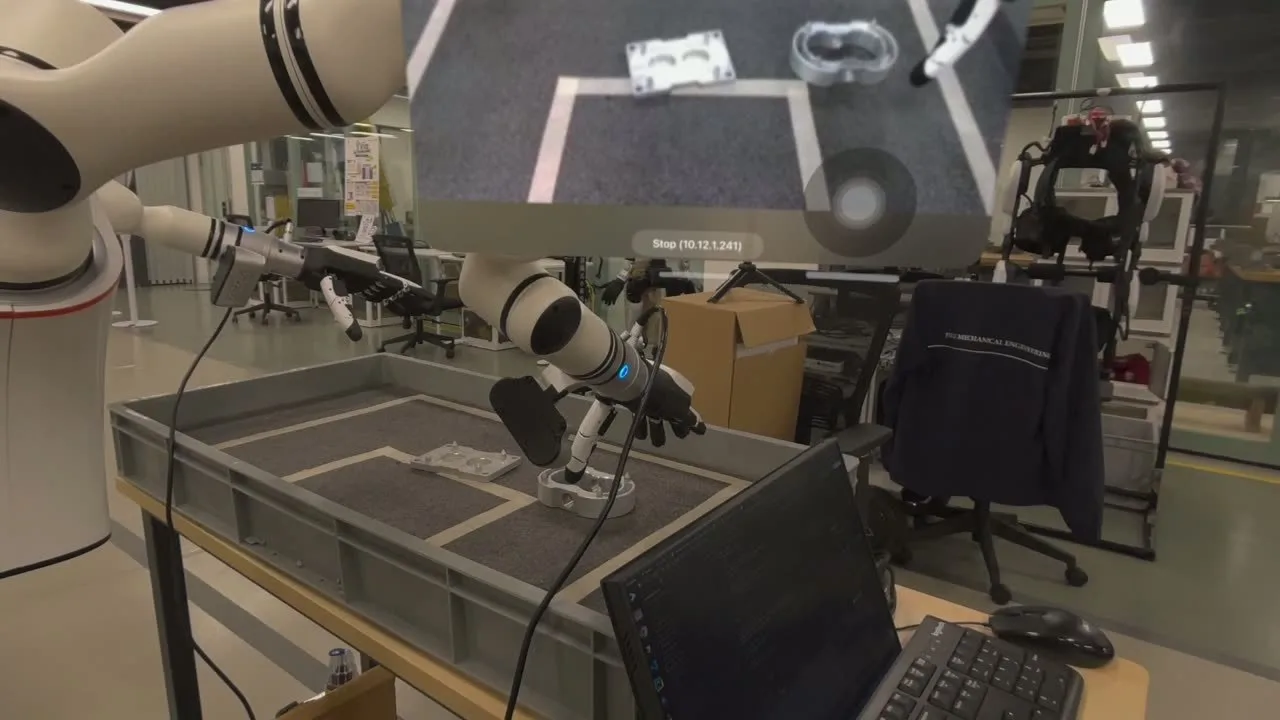
Bimanual assembly workstation with an egocentric camera overlay of the parts tray.

Methods

  • imitation learning
  • diffusion policy
  • visuo-haptic sensing
  • teleoperation
  • human–robot collaboration
  • 6D pose estimation
  • point-cloud fusion