How to Understand Channels in Convolutional Neural Networks
A summary of some concepts that beginners may find difficult to understand when starting out in deep learning.
Notes on robotics, vision, and systems.
A summary of some concepts that beginners may find difficult to understand when starting out in deep learning.
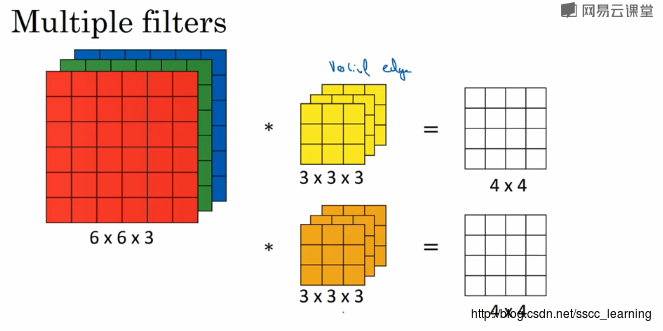
Generally, channels refers to the number of convolution kernels in each convolutional layer. The channels of the initial input image sample depend on the image type, such as RGB; after convolution, out_channels depends on the number of convolution kernels. The out_channels then also serves as the in_channels of the convolution kernel in the next convolution.

Convolution is essentially the process of taking a matrix of a specific size each time, sliding it across the input matrix, and computing the inner product at each position.
The process of setting up a deep learning environment with Anaconda + CUDA + TensorFlow 2 + Keras.
An installation tutorial for the commonly used deep learning environment PyTorch.
A summary of IEEE paper writing guidelines
Notes on LaTeX basics
I use a lot of formulas when writing blog posts, and having to look up LaTeX syntax every time I forget it is tedious, so I'm summarizing it here.
Notes and examples on functions and methods for array operations with NumPy, including array creation, slicing and indexing, basic array operations (transposing, joining, sorting, flattening, and more), and the use of some basic array computation functions.
We may want to install many different versions of Python on a computer, or we may want a Python environment to contain only the packages we use so it is easier to package and distribute a program. These situations all require creating Python virtual environments. Anaconda is a tool for managing Python environments like this.