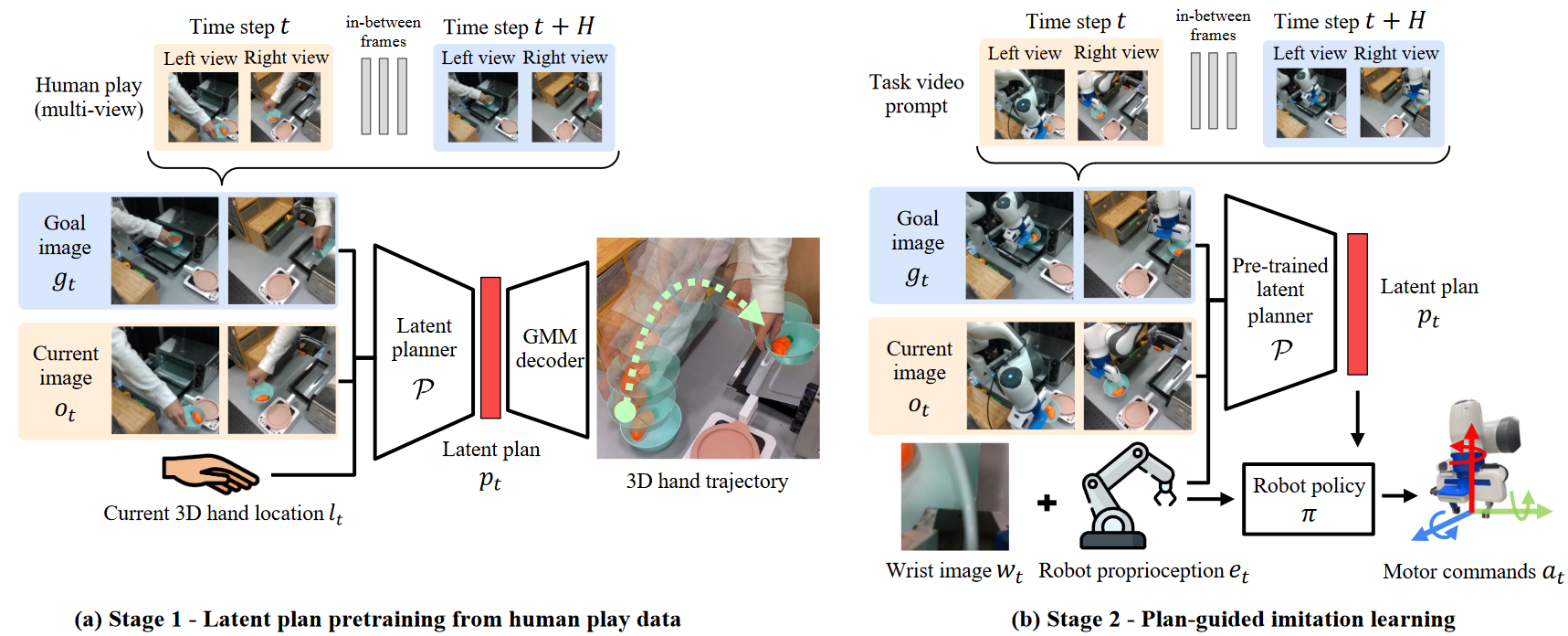
[Paper Reproduction] MimicPlay: Learning Robot Skills from Human Demonstrations
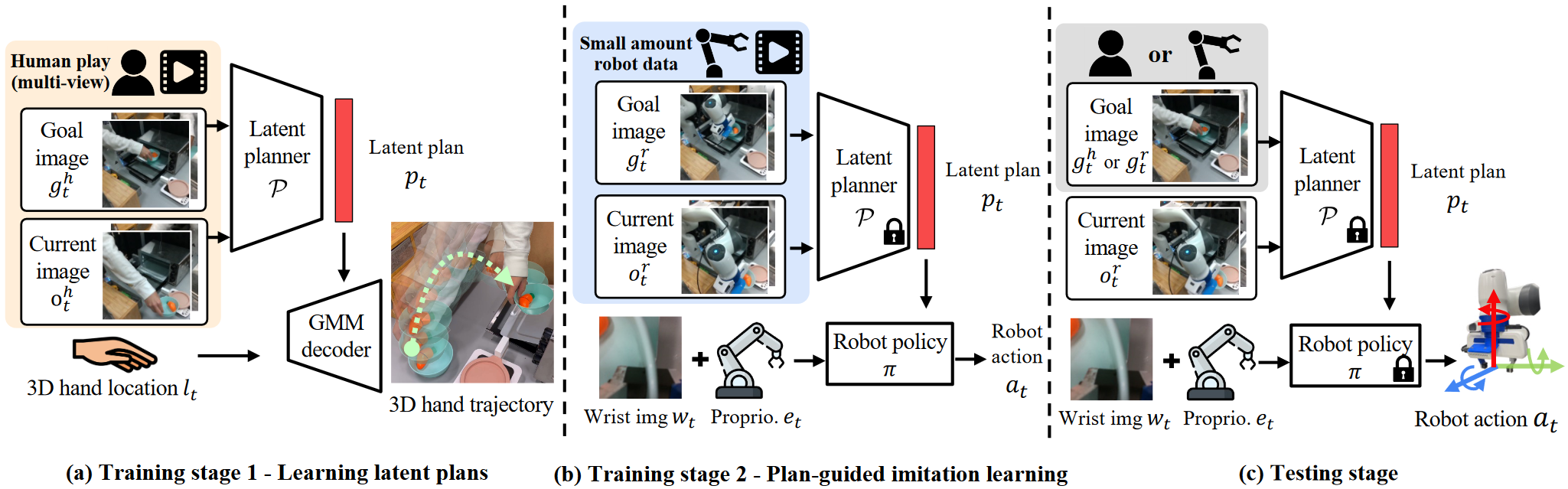
A long-horizon imitation learning method from Fei-Fei Li's team at Stanford University that learns by watching human actions.
21 posts
A long-horizon imitation learning method from Fei-Fei Li's team at Stanford University that learns by watching human actions.
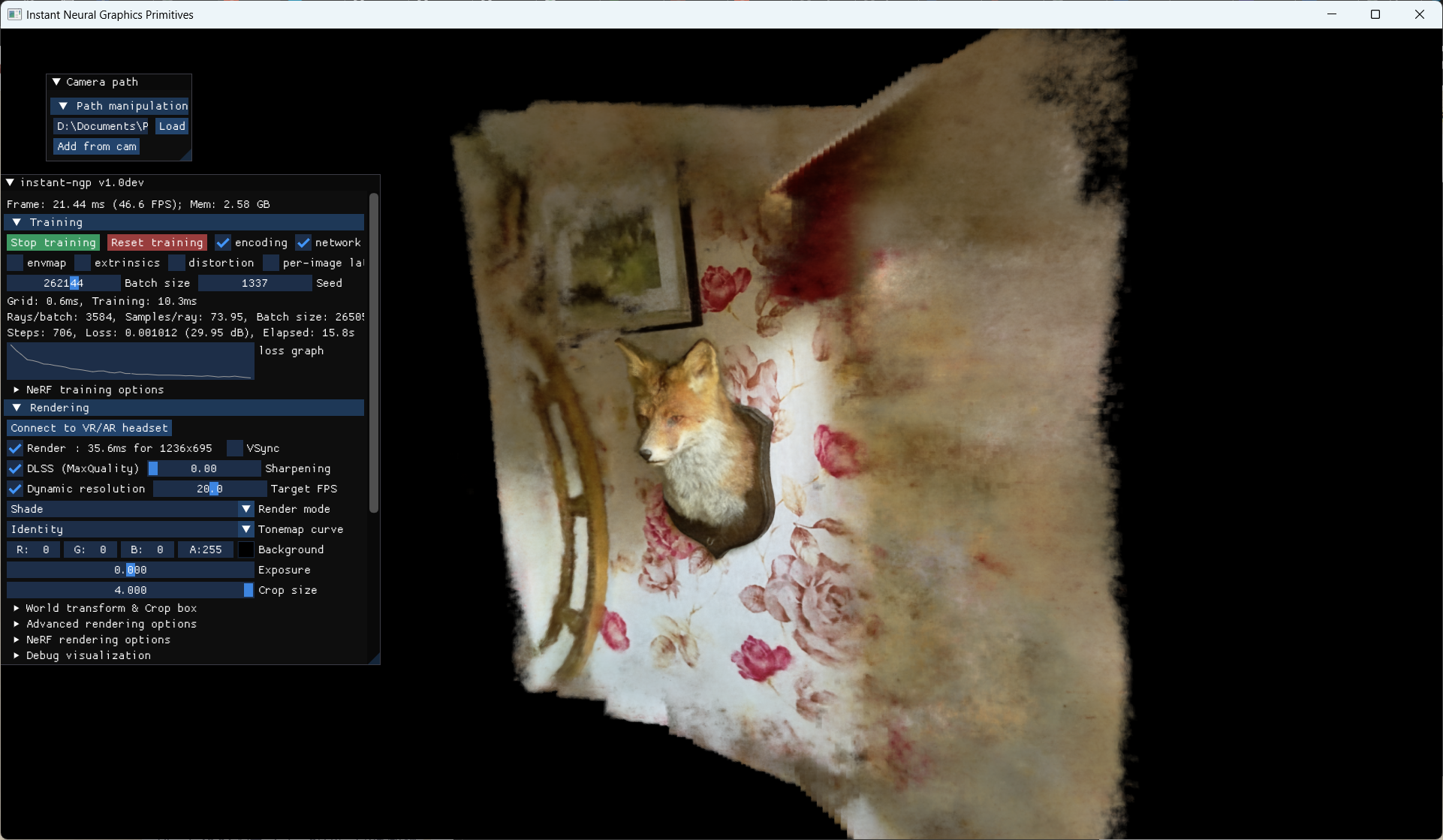
Instant-NGP, short for Instant Neural Graphics Primitives, uses multiresolution hash encoding to solve the efficiency problem encountered when parameterizing NeRF with a fully connected neural network. It greatly accelerates network training, reducing three-dimensional reconstruction time from several hours to several seconds.
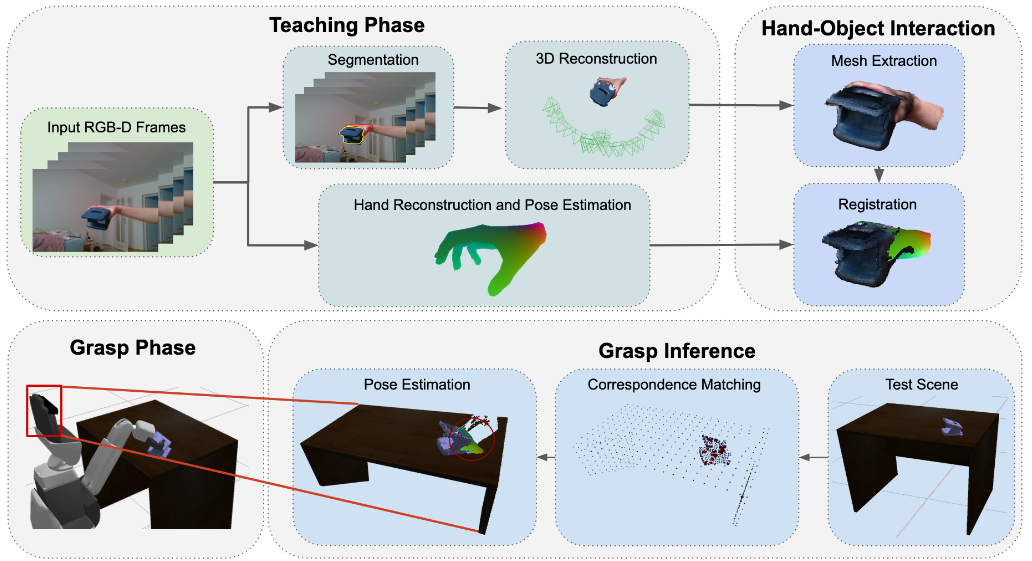
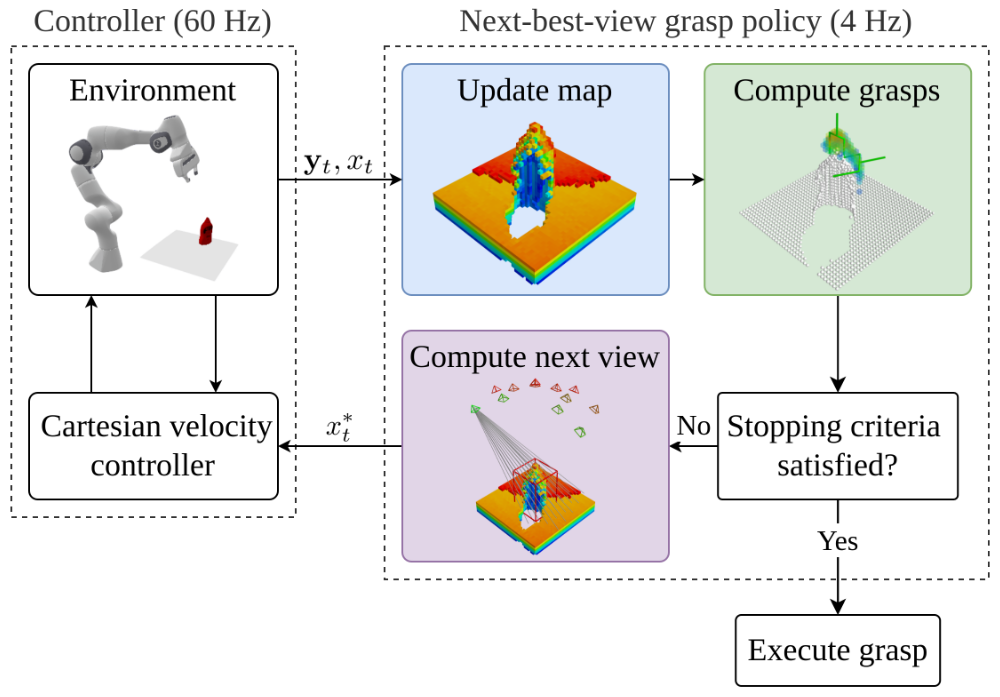
A survey of research on methods for robot motion generation and planning learned from videos of humans grasping objects.
A survey of research on robotic grasping learned from videos of humans grasping objects.
Reproducing the RGB Matters algorithm proposed by Shanghai Jiao Tong University.
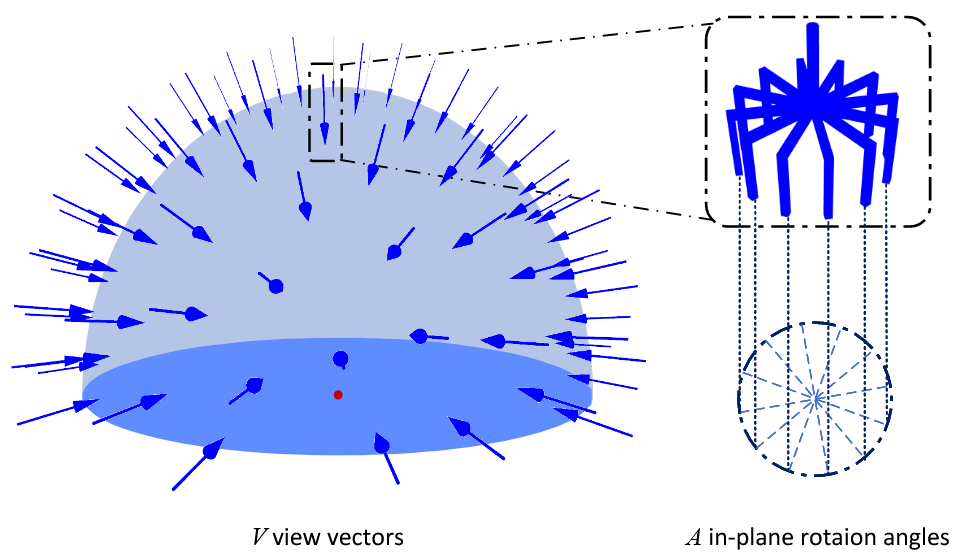
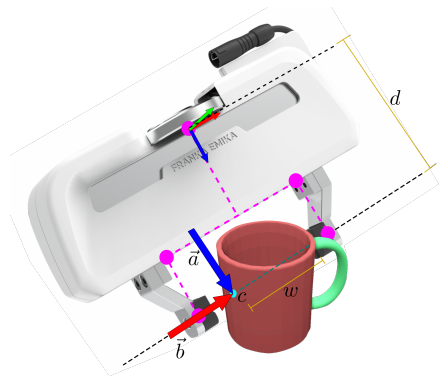
A survey of grasp pose estimation papers from top conferences and journals over the past three years
Reproducing Contact GraspNet, a grasp estimation algorithm proposed by NVIDIA
Algorithm reproduction
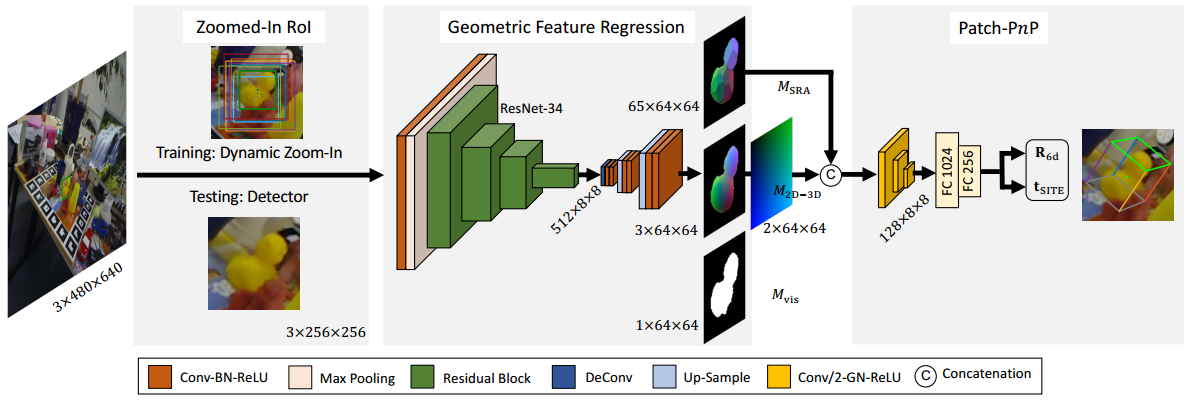
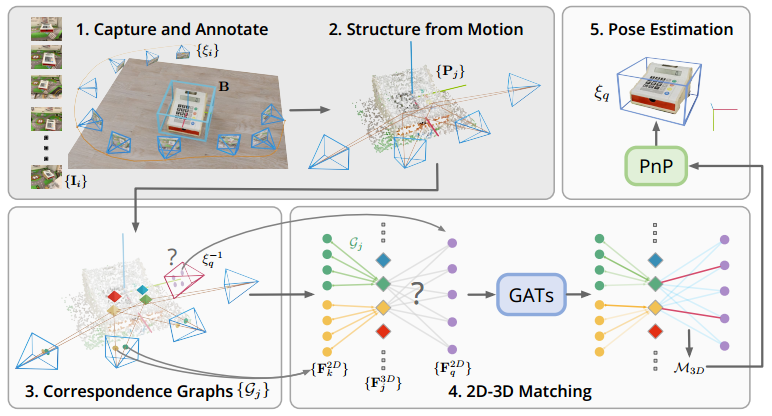
Notes from searching for and reading ECCV papers related to 6D pose estimation from the past three years
A review of and notes on CVPR papers related to 6D pose estimation from the past three years
I searched for papers citing DenseFusion, but so many of them had no open-source code that after reading two, I switched to focusing only on papers from top-tier conferences.
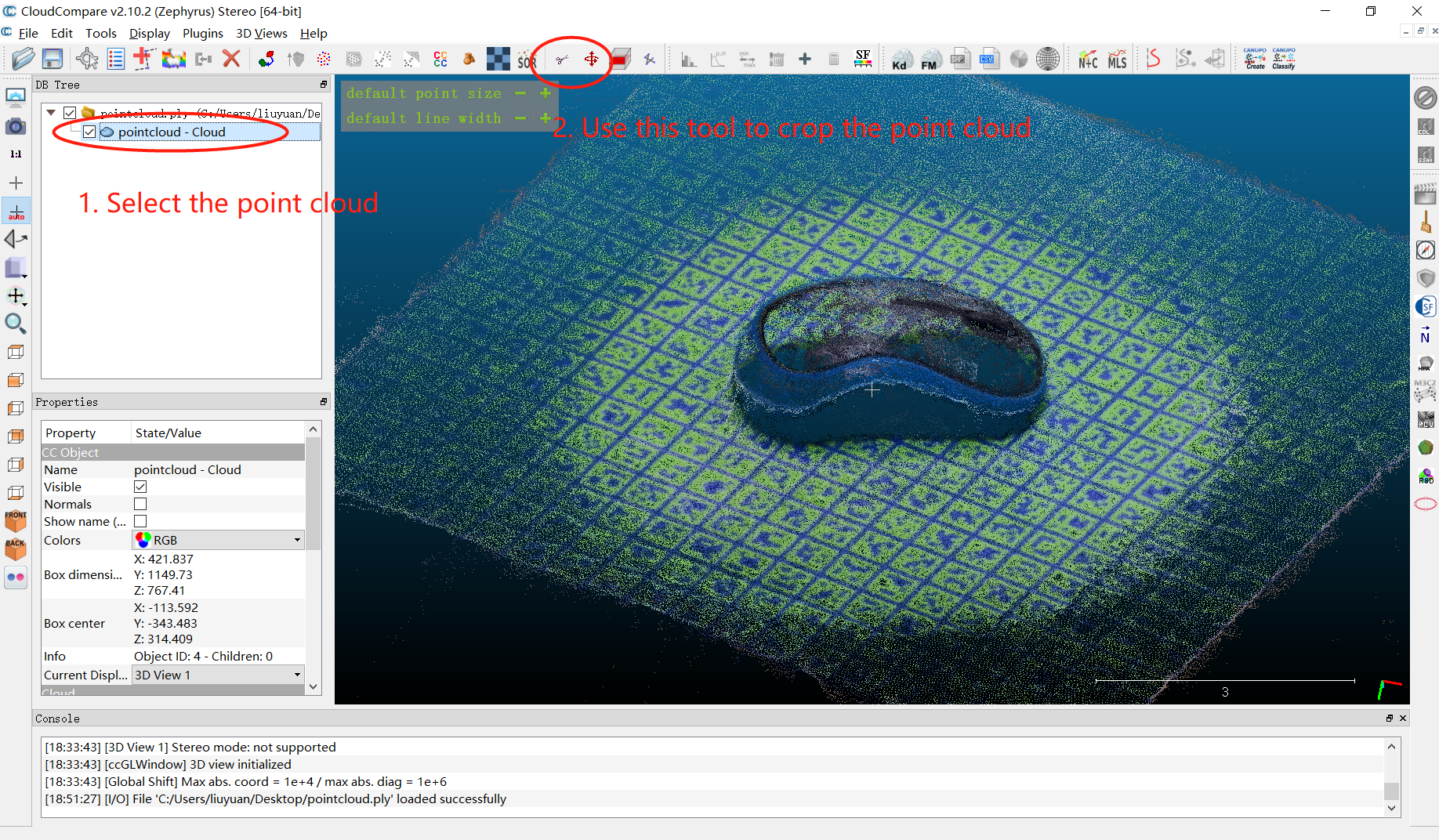
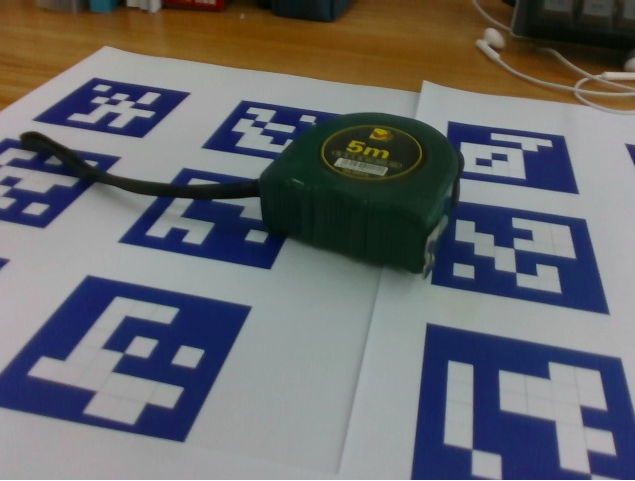
I am currently studying 6D pose estimation algorithms. The LINEMOD dataset is the most commonly used dataset in this field, but testing only on an existing dataset is not enough. Building a custom dataset is necessary for practical applications.
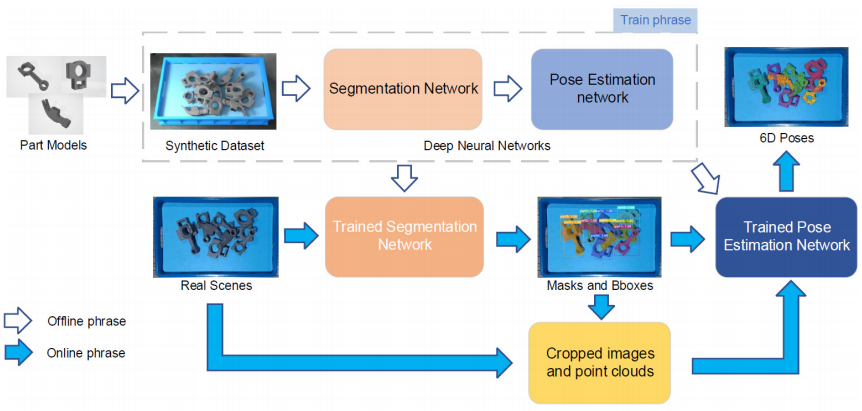
FFB6D fuses RGB and point cloud information during the feature extraction stage, then performs instance segmentation and keypoint detection.
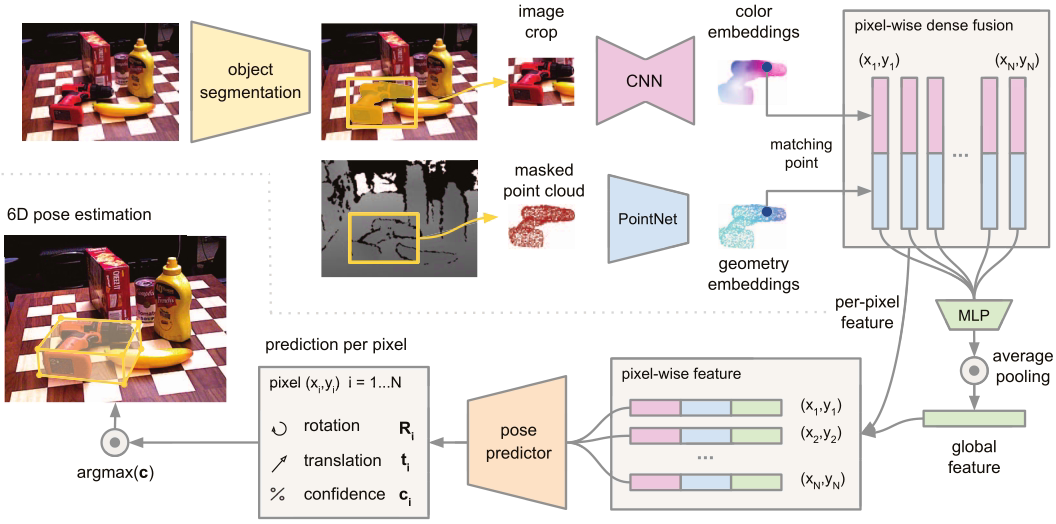
This paper proposes a heterogeneous architecture that processes two data sources (RGB and depth maps) separately and uses a novel dense fusion network to extract dense pixel-level features for pose estimation.
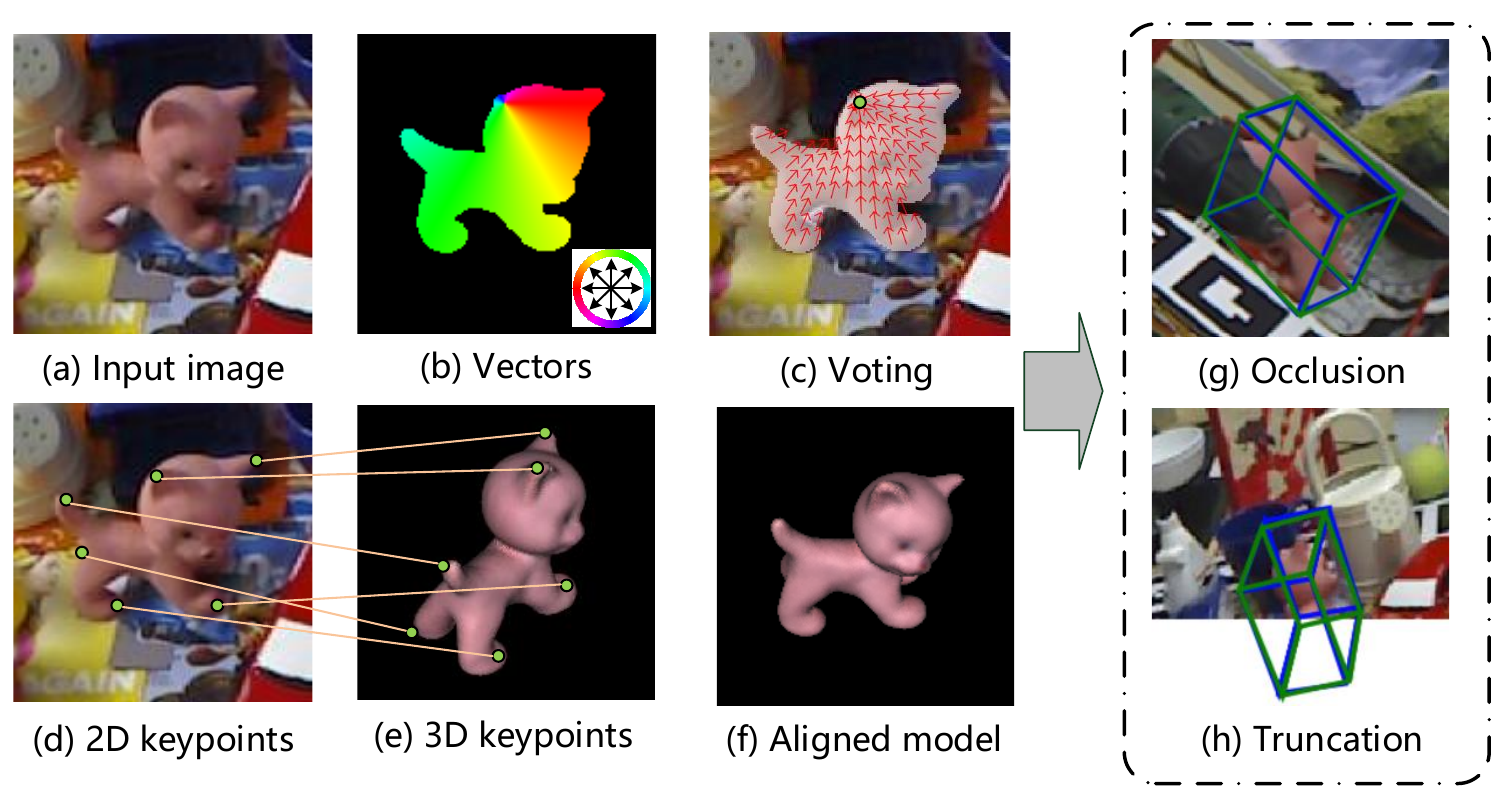
Attempted to test PVNet but gave up partway through.
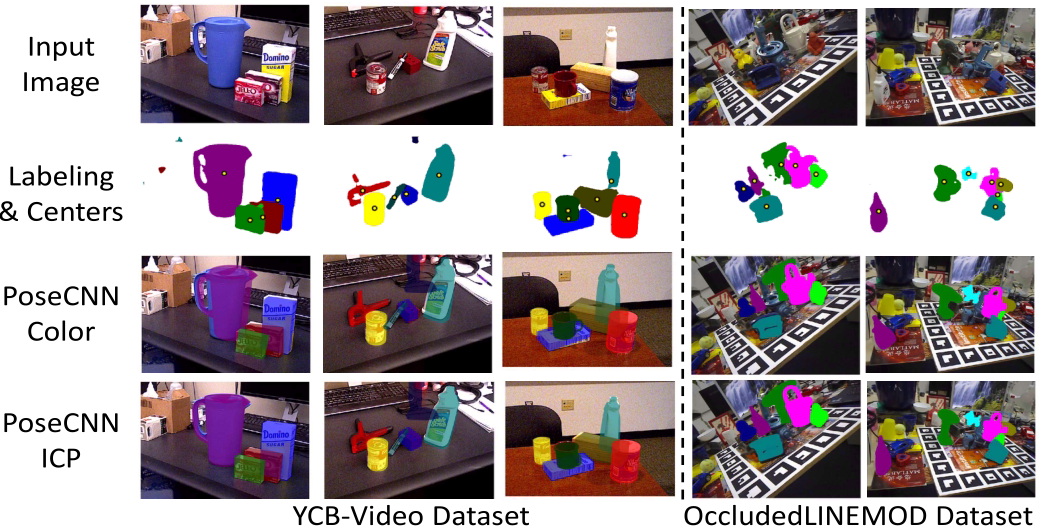
Addresses the increased difficulty of 6D pose estimation caused by occlusion and clutter between objects by combining a backbone network with ICP point matching.
The LineMod algorithm was proposed by Hinterstoisser et al. in 2011. Using template matching, it addresses real-time detection and 6D pose estimation and localization for low-texture three-dimensional objects in cluttered scenes.
COLMAP is a general-purpose Structure-from-Motion (SfM) and Multi-View Stereo (MVS) tool with graphical and command-line interfaces. OpenMVS is one of the three-dimensional reconstruction frameworks that produces better reconstruction results, and it provides automated scripts.
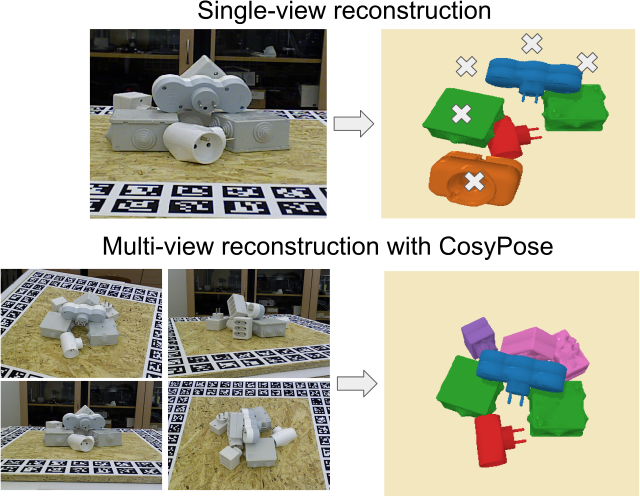
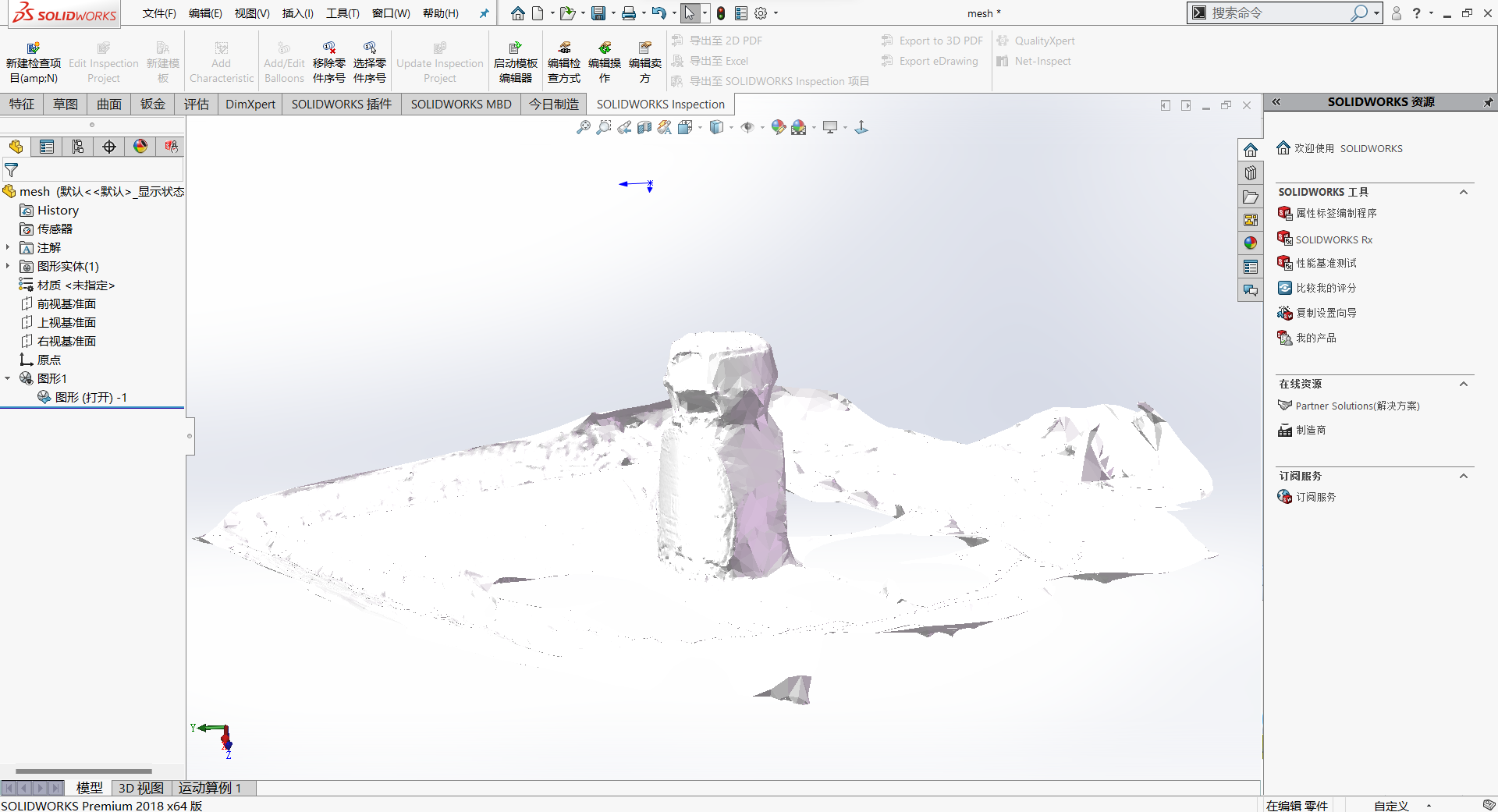
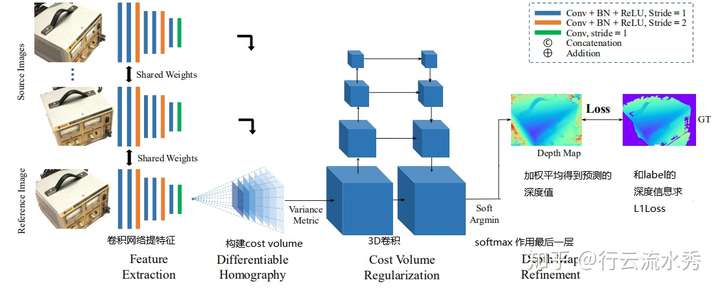
Three-dimensional reconstruction uses a camera to photograph real-world objects and scenes, then processes them with computer vision techniques to obtain a three-dimensional model of the object. The main techniques involved include multi-view stereo, depth map estimation, point cloud processing, mesh reconstruction and optimization, texture mapping, Markov random fields, image segmentation, and more.
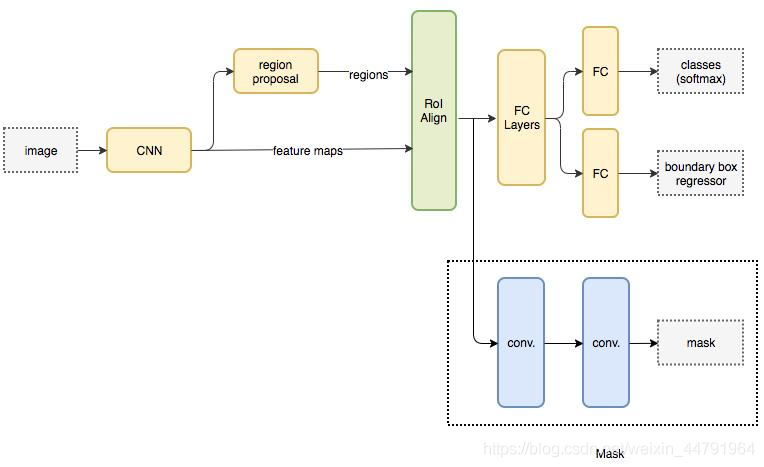
Mask R-CNN is a major 2017 work by Kaiming He. It performs instance segmentation alongside object detection and achieves excellent results.